Proposal:
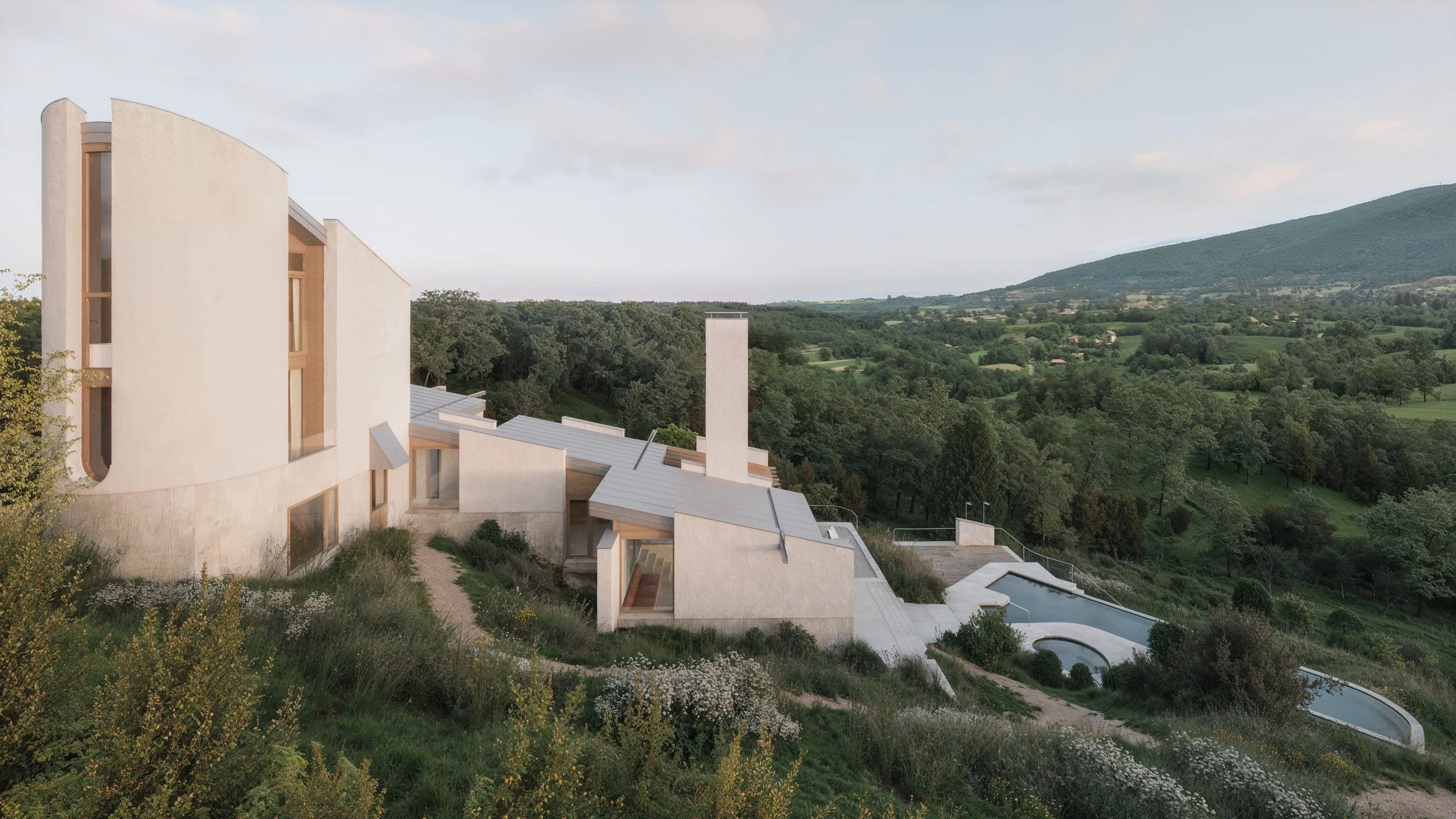
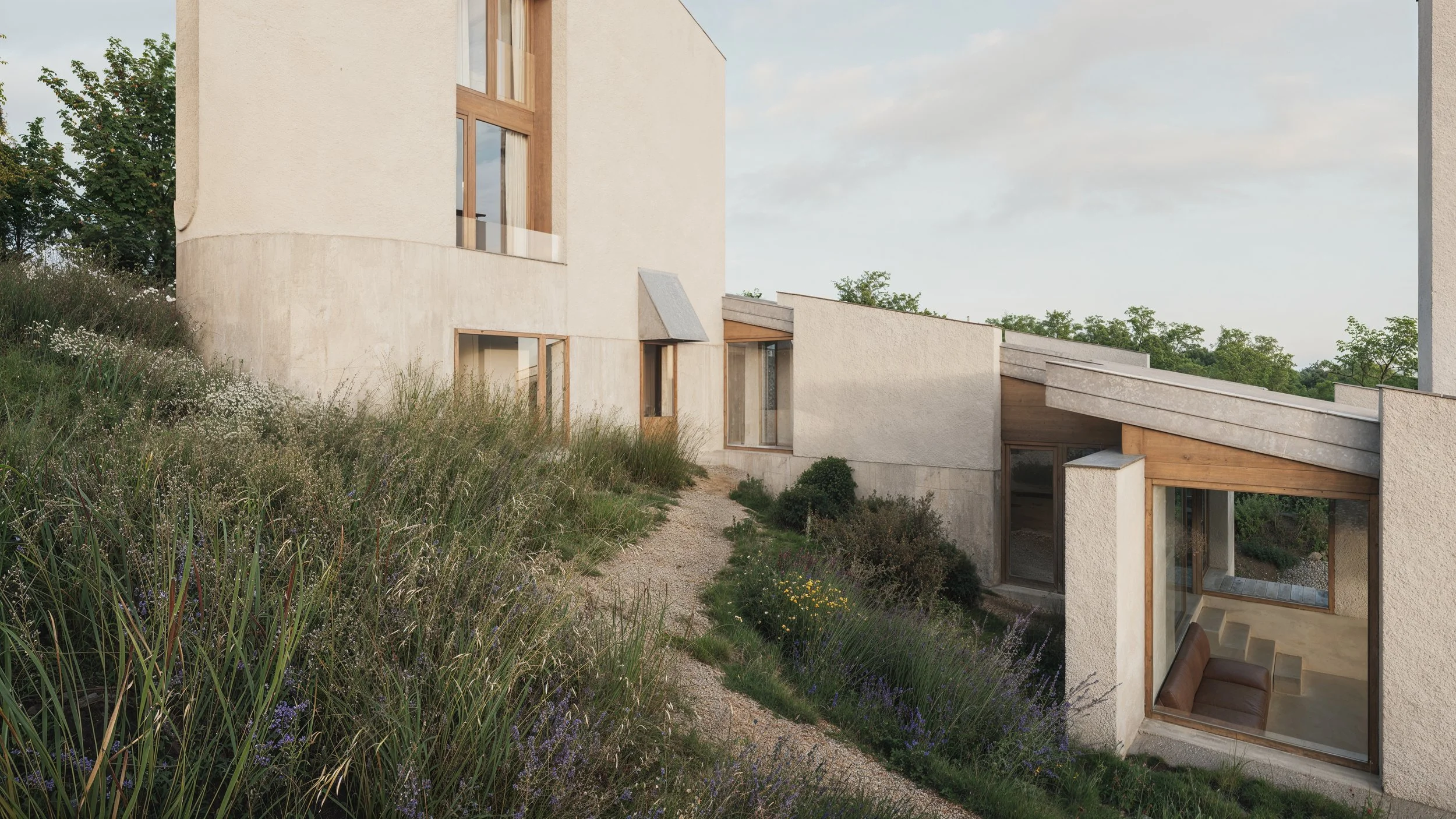
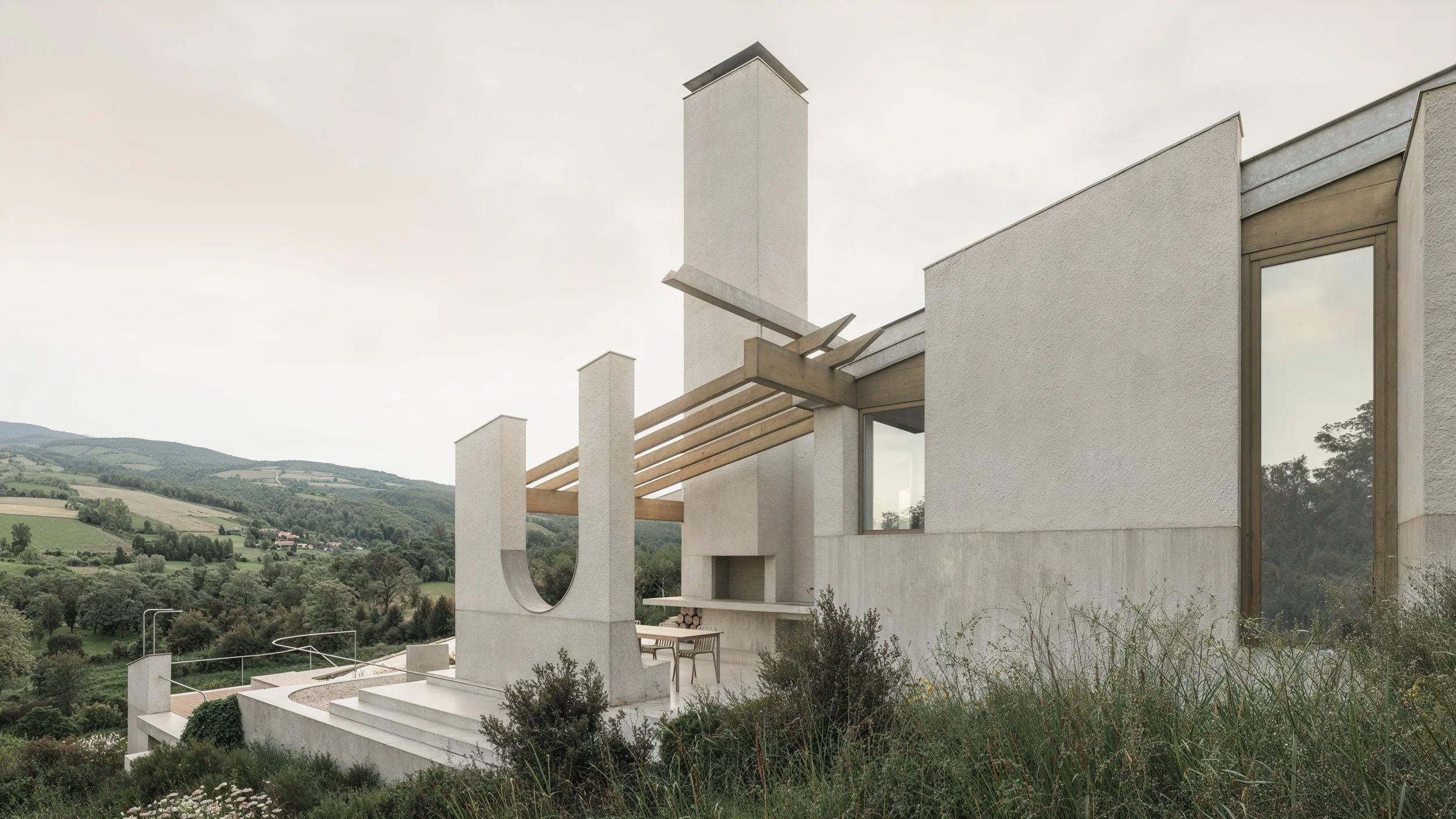
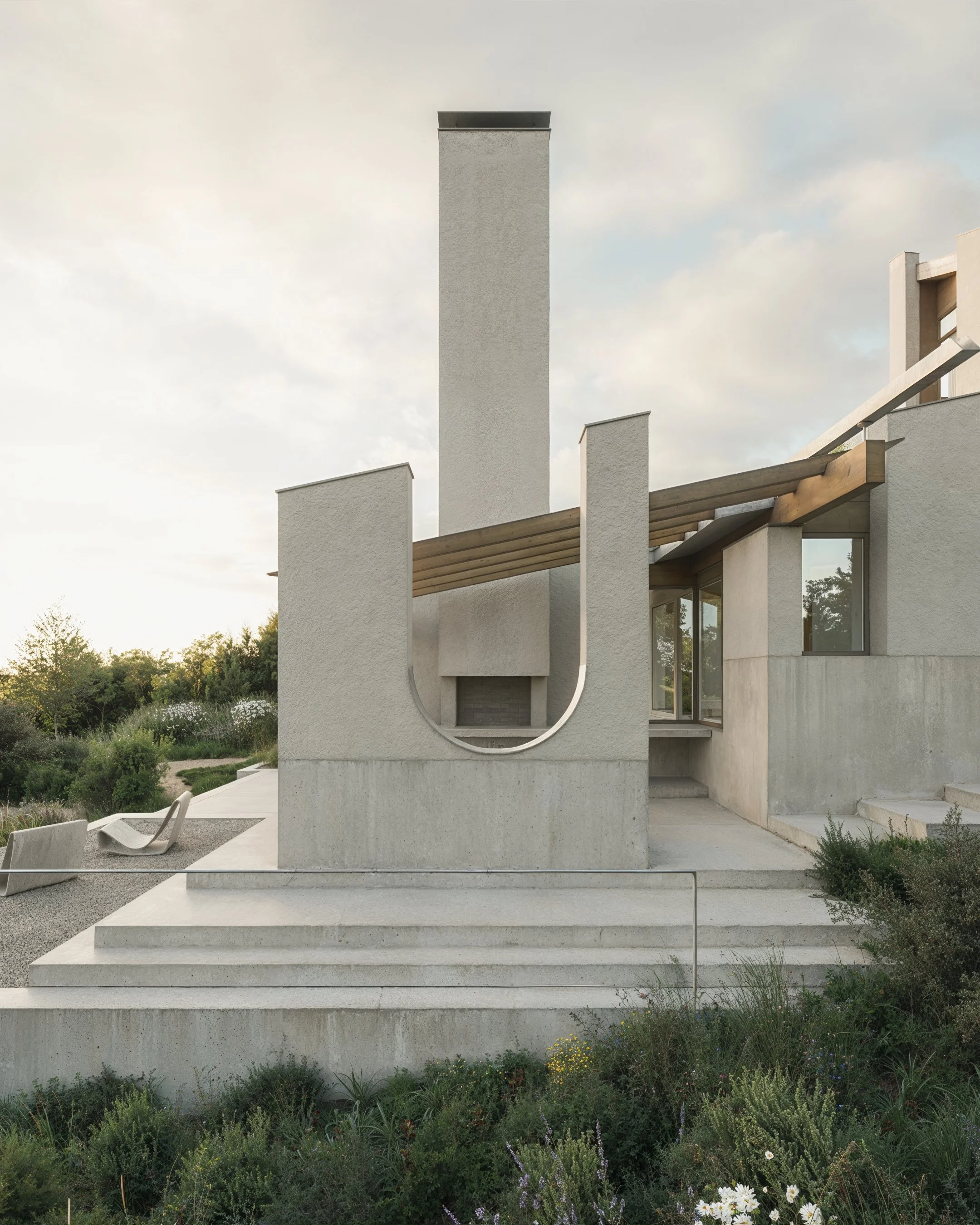
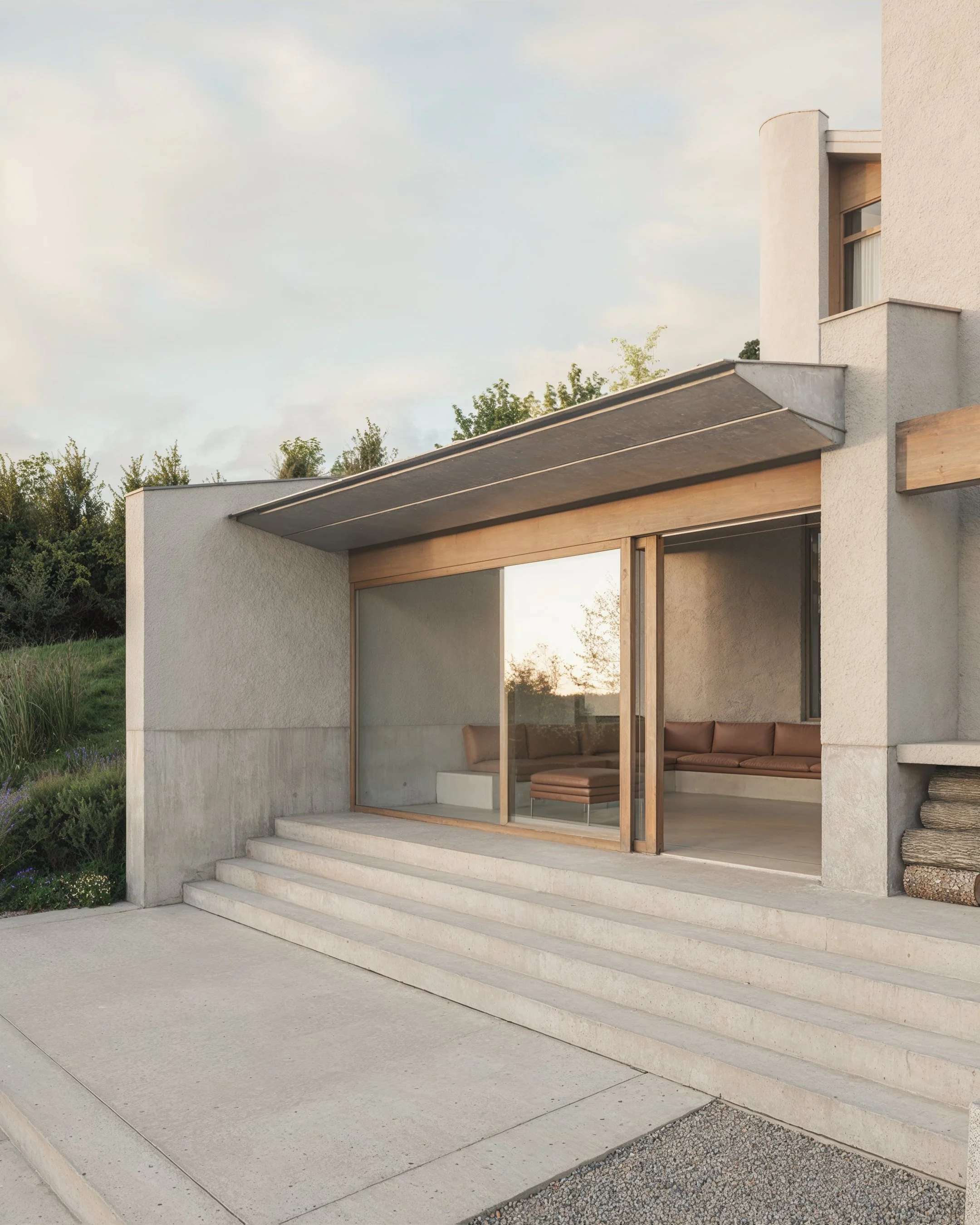
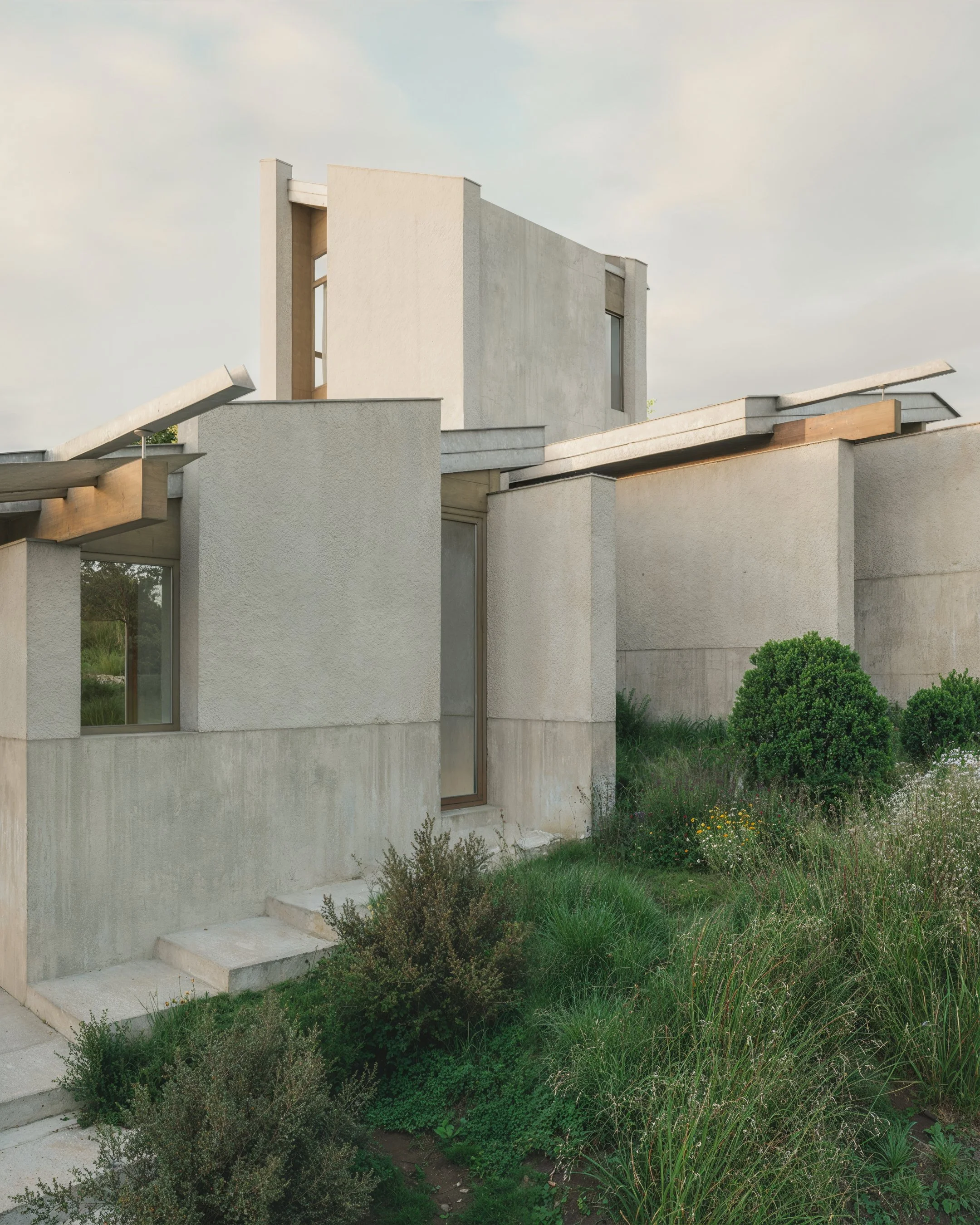
Materialization is intentionally restrained. Light-toned plastered surfaces and warm wooden accents establish a calm and tactile palette that allows light and shadow to articulate the architecture throughout the day. Openings are carefully positioned and proportioned, creating framed views while maintaining a sense of enclosure and protection. The relationship between solid and void is not decorative, but spatial—each opening is the result of a specific interior need or external condition.
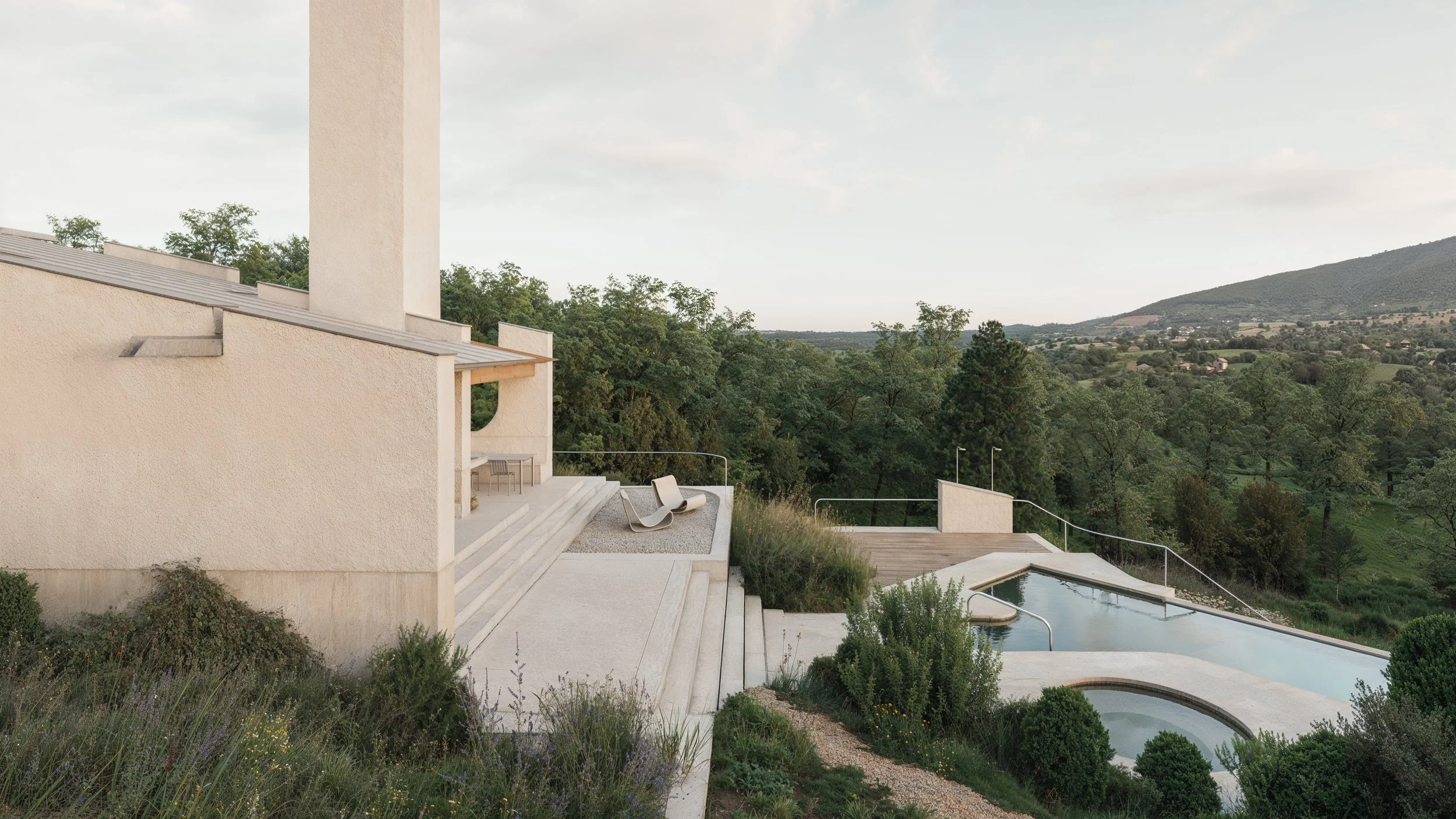
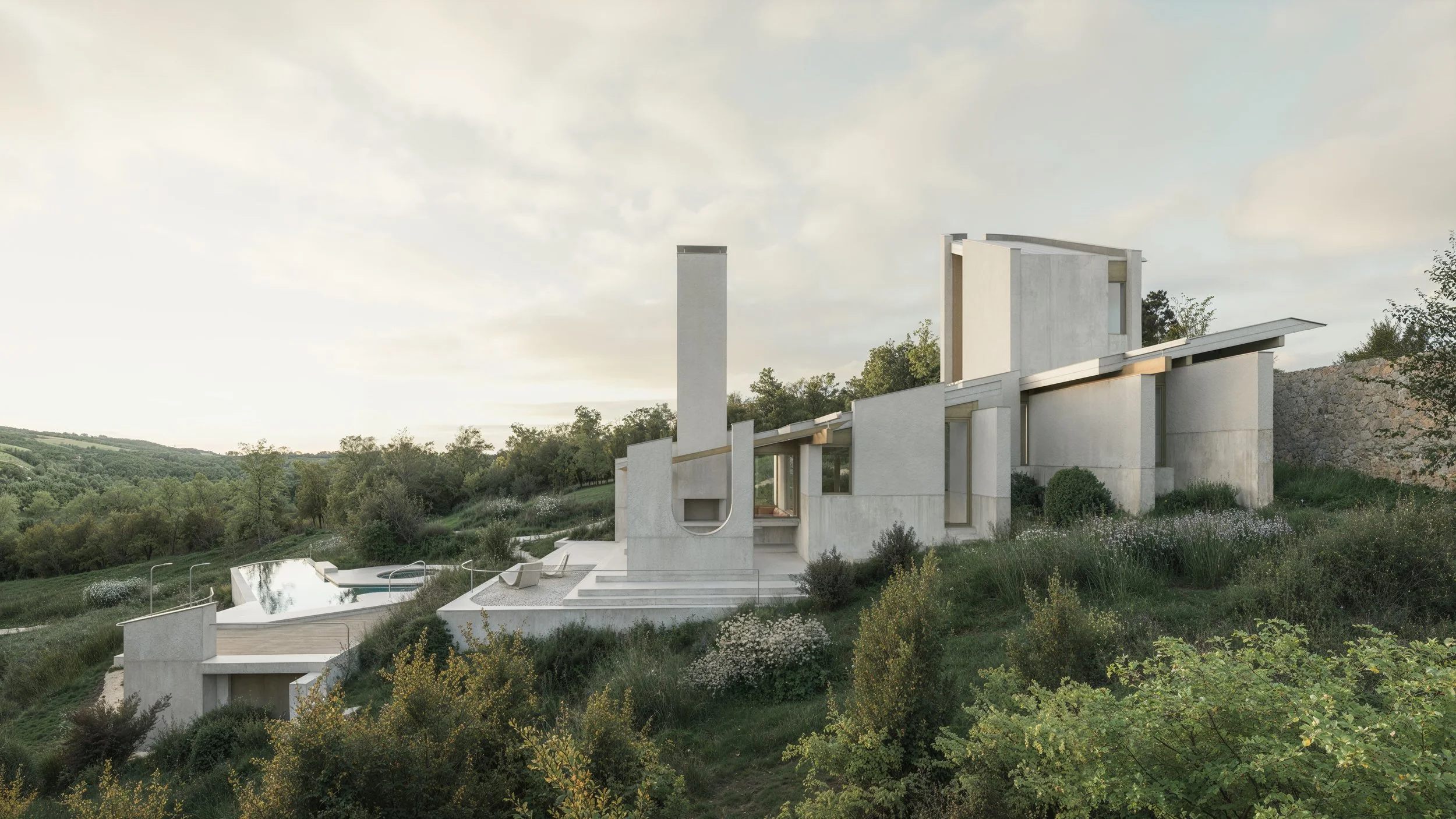
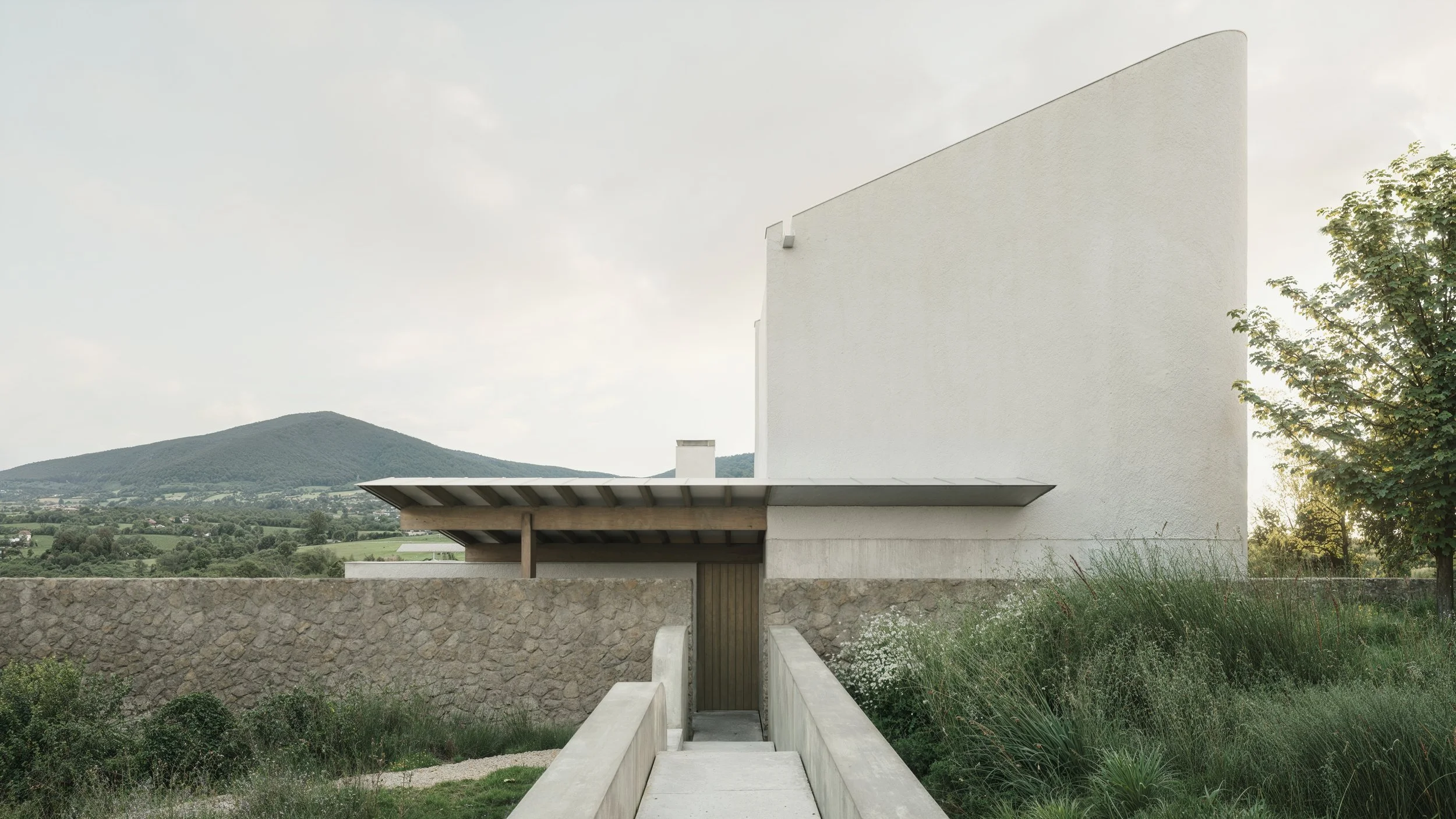
Landscape design is treated as an integral part of the project rather than a secondary layer. Vegetation follows the logic of the terrain, softening transitions between built and unbuilt spaces and reinforcing the continuity of the slope. The house does not seek dominance over its setting; instead, it aims for balance—where architecture, terrain, and everyday use coexist in a quiet, measured dialogue.
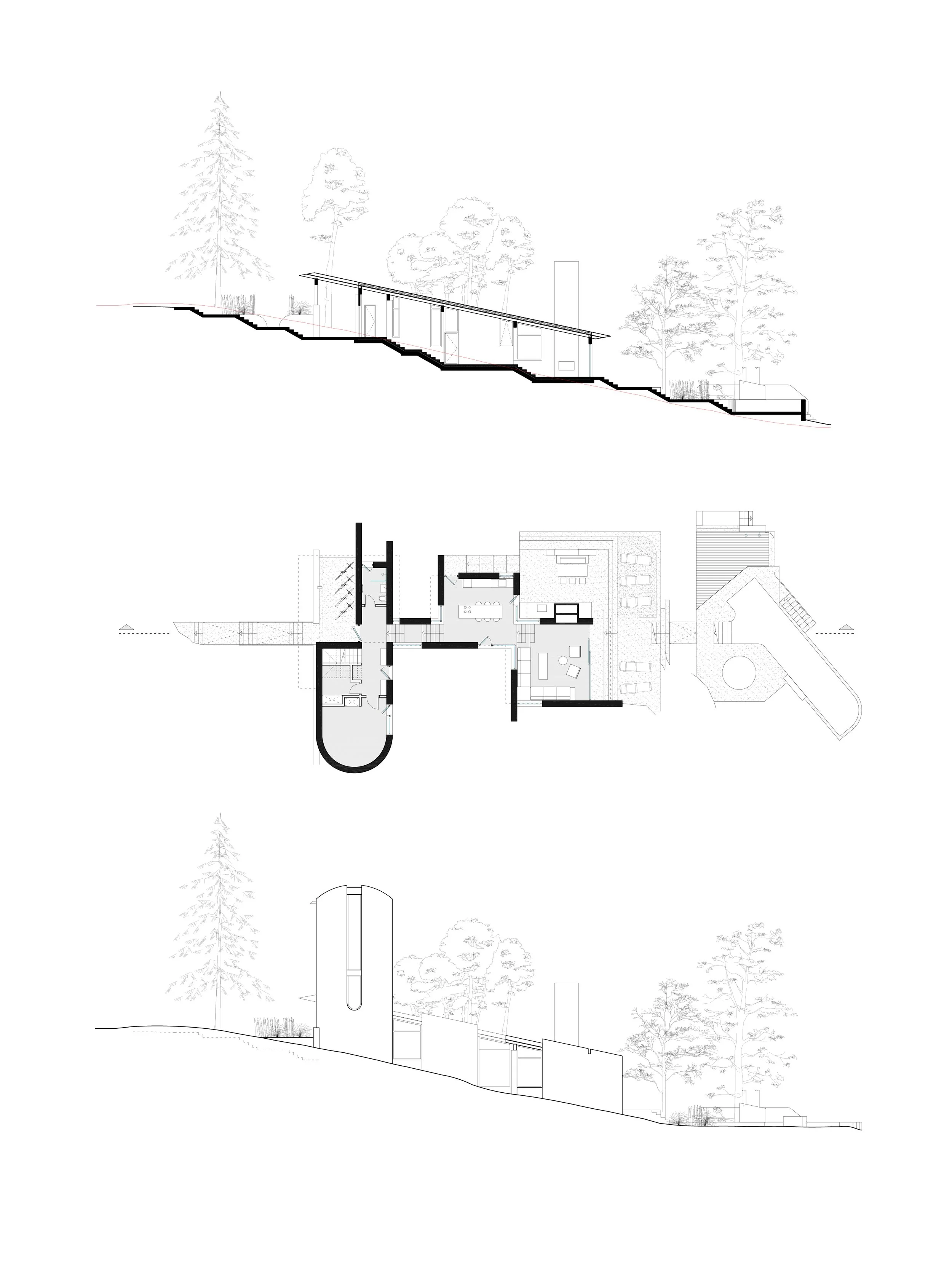
Set on a sloping terrain, the house is conceived as a sequence of spatial moments rather than a single compact volume. The project responds directly to the topography, allowing the ground to define both the organization and the character of the architecture. Instead of resisting the slope, the structure steps along it, forming a gradual transition between interior and landscape, built and natural. The approach emphasizes horizontality and continuity, minimizing visual impact while maximizing spatial depth.
The program is distributed across several interconnected volumes, each adjusted in height and orientation to accommodate views, sunlight, and privacy. Roof planes follow the natural descent of the terrain, reinforcing the reading of the house as part of the landscape rather than an object placed upon it. Circulation is conceived as a slow progression, both inside and outside, where movement reveals changing perspectives toward the surrounding greenery and distant horizons.